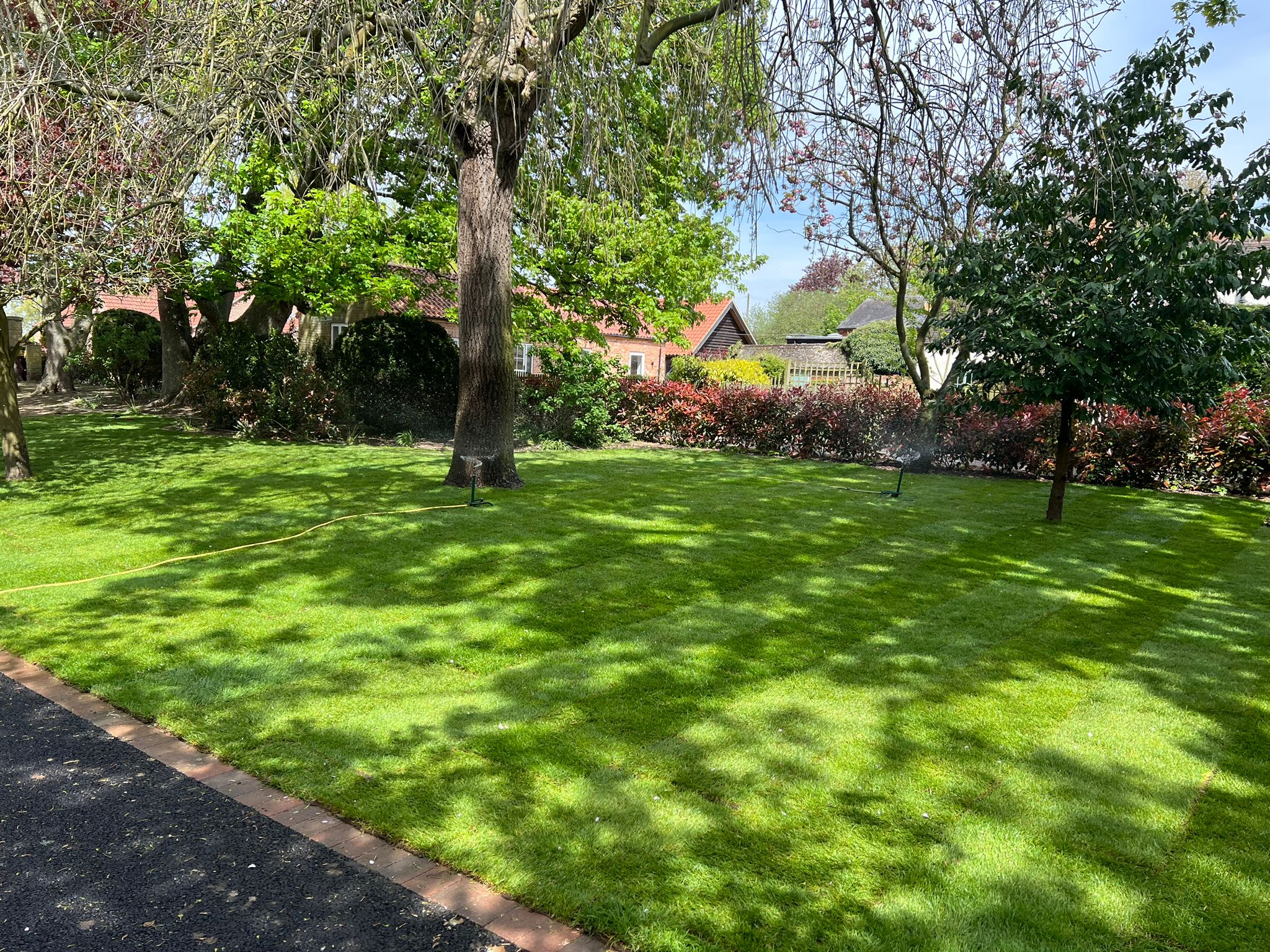
Shade reduces light, slows growth and can encourage moss and bare patches. Trees, buildings and fences all cast shadow, and many lawns have at least some shaded areas. While grass will never thrive in heavy, permanent shade, you can improve the situation with thoughtful management and realistic expectations.
County Turf supplies turf suited to a range of conditions. For shaded sites, choosing appropriate grass varieties and adjusting your maintenance helps.
Some grass mixtures tolerate shade better than others. Fine fescues, for example, often perform better in lower light than species that prefer full sun. If you’re laying new turf or overseeding, ask for a product suited to shaded conditions.
Thinning tree canopies or removing lower branches can increase light and airflow. Even small changes can help. Be mindful of tree health and any permissions needed before carrying out work.
Mow shaded areas a little higher than sunny parts of the lawn—longer grass captures more light. Avoid heavy feeding in deep shade, as soft growth is more prone to disease. Improve drainage with aeration if the area stays damp, as shade and moisture together favour moss.
In very heavy shade, consider whether an alternative surface or planting might be more appropriate. For moderate shade, the right turf and careful management can maintain a useful, attractive area.