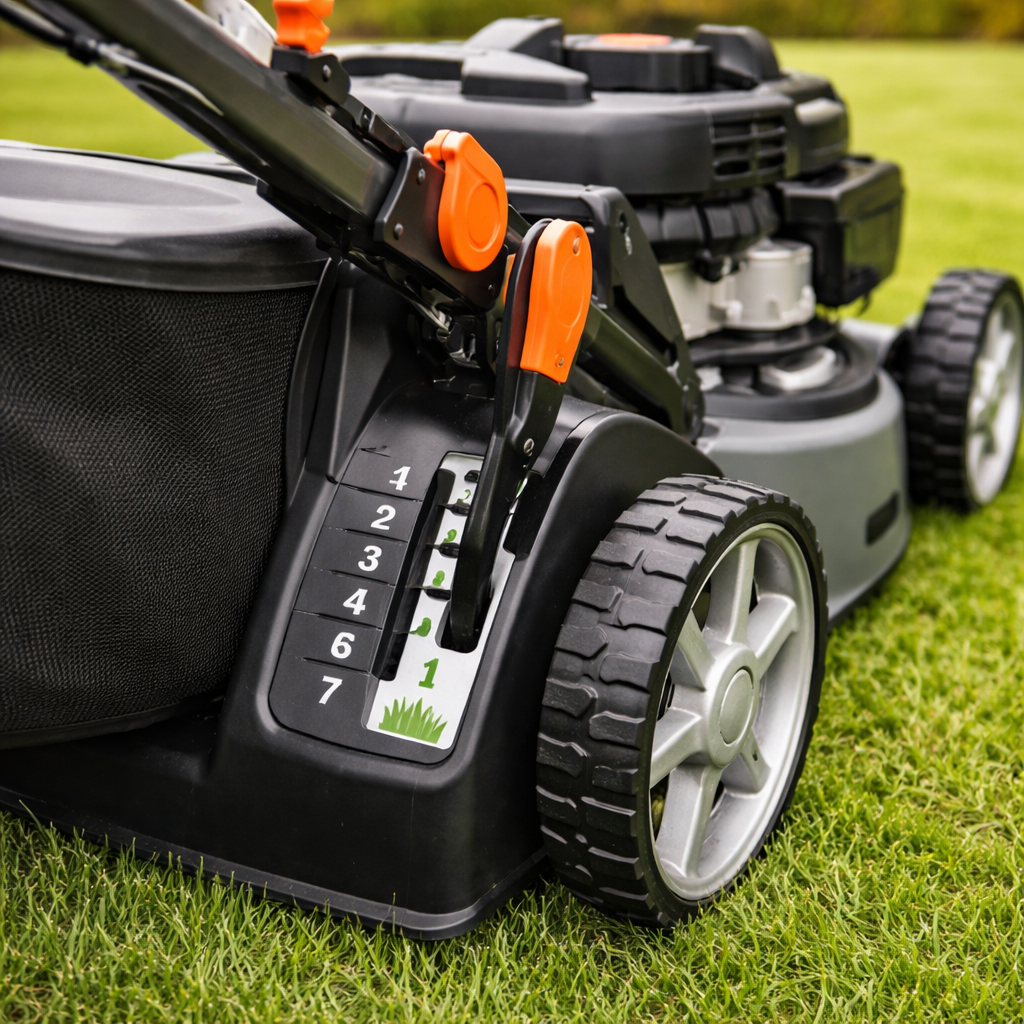
Cutting height has a big impact on lawn health. Too short and the grass becomes stressed, thin and vulnerable to drought, disease and weeds. Too long and the sward can become soft, uneven and harder to maintain. Adjusting mowing height through the year helps your turf cope with seasonal changes and stay looking its best.
Whether you have a domestic lawn or maintain a larger area, matching mowing height to conditions makes a real difference.
As growth accelerates, gradually lower the cut from a slightly higher winter setting. Avoid cutting too low too soon—give the grass time to green up and strengthen. A moderate height supports strong leaf growth and helps the lawn fill in after winter.
In dry or hot weather, raising the cut slightly reduces stress and helps the turf retain moisture. Longer grass shades the soil and can tolerate drought better. For fine turf such as bowling greens, height is typically lower and managed more precisely.
As growth slows, maintain a moderate height. Avoid very short cuts before winter, as this can weaken the grass and leave it exposed to frost and disease.
Raise the cut for the last few mows of the year. Longer grass going into winter offers some protection. Mow less frequently and only when conditions are suitable—never when the ground is wet or frozen.
As a guide, domestic lawns often do well between 25–40mm depending on use and conditions. Sports and fine turf are managed to much tighter specifications. Consistency and sharp blades also matter—dull blades tear grass and increase disease risk.