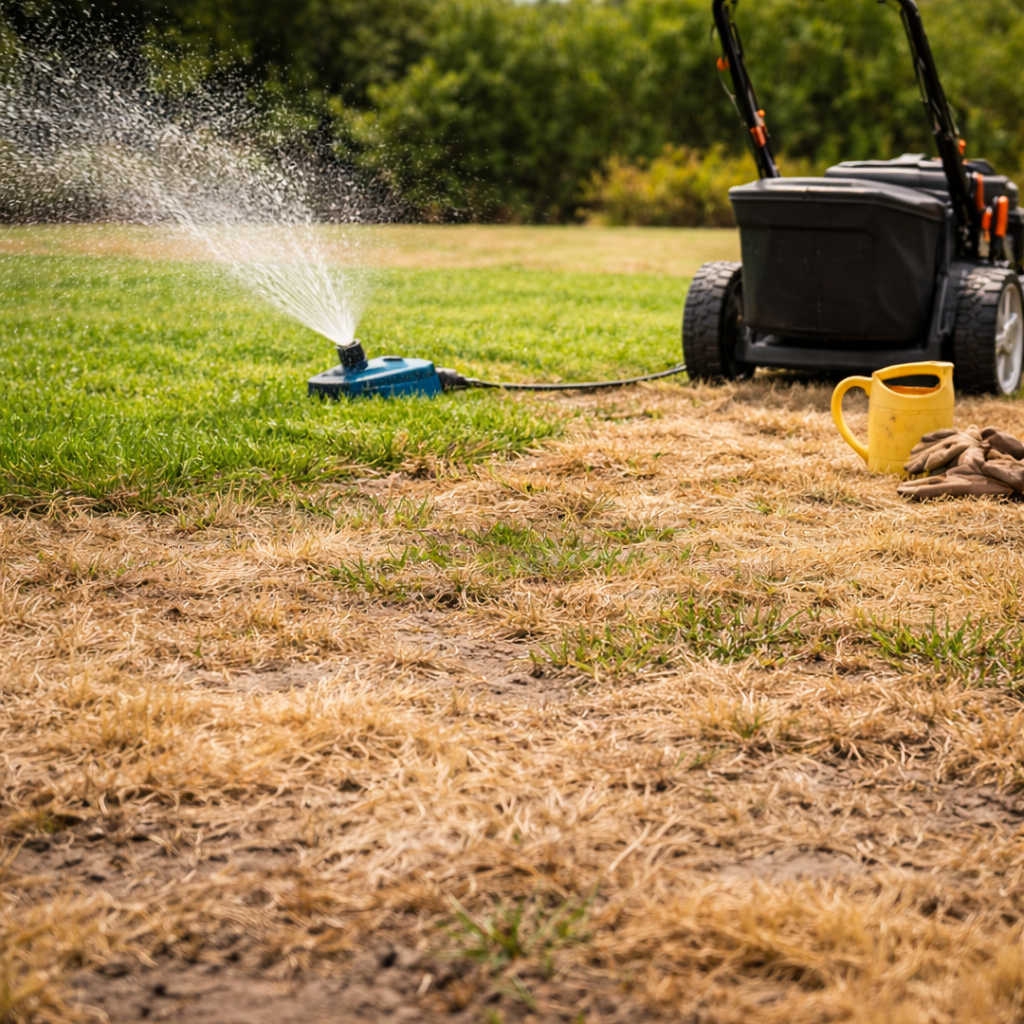
Extended dry, hot periods can leave lawns brown, stressed and slow to recover. While some dormancy is normal for grass in severe drought, there are steps you can take to reduce stress and support recovery when rain returns.
County Turf grows turf on free-draining sand rootzone in North Lincolnshire. We understand how soil type and weather affect turf performance. Here are practical tips for managing your lawn during dry summers.
If you water, do it deeply and less often rather than light daily sprinkles. Deep watering encourages deeper roots. Water early in the morning or late in the evening to reduce evaporation and fungal risk. Be aware of any local restrictions—during hosepipe bans, new turf may have an exemption for the first few weeks after laying; check with your supplier.
Raise the cutting height during drought. Longer grass shades the soil and retains moisture better. Mow less frequently and avoid cutting when the grass is already stressed. Sharp blades are important—dull blades tear the grass and increase water loss.
Avoid heavy feeding in drought—it can encourage growth the plant cannot support. Minimise foot traffic on stressed areas. Delay renovation work until conditions improve.
Most lawns recover once moisture returns. Light feeding in early autumn can help. Overseed bare patches if necessary. Patience is often the best approach—give the turf time to green up and fill in.
With careful management, your lawn can weather a dry summer and return to full health when conditions improve.