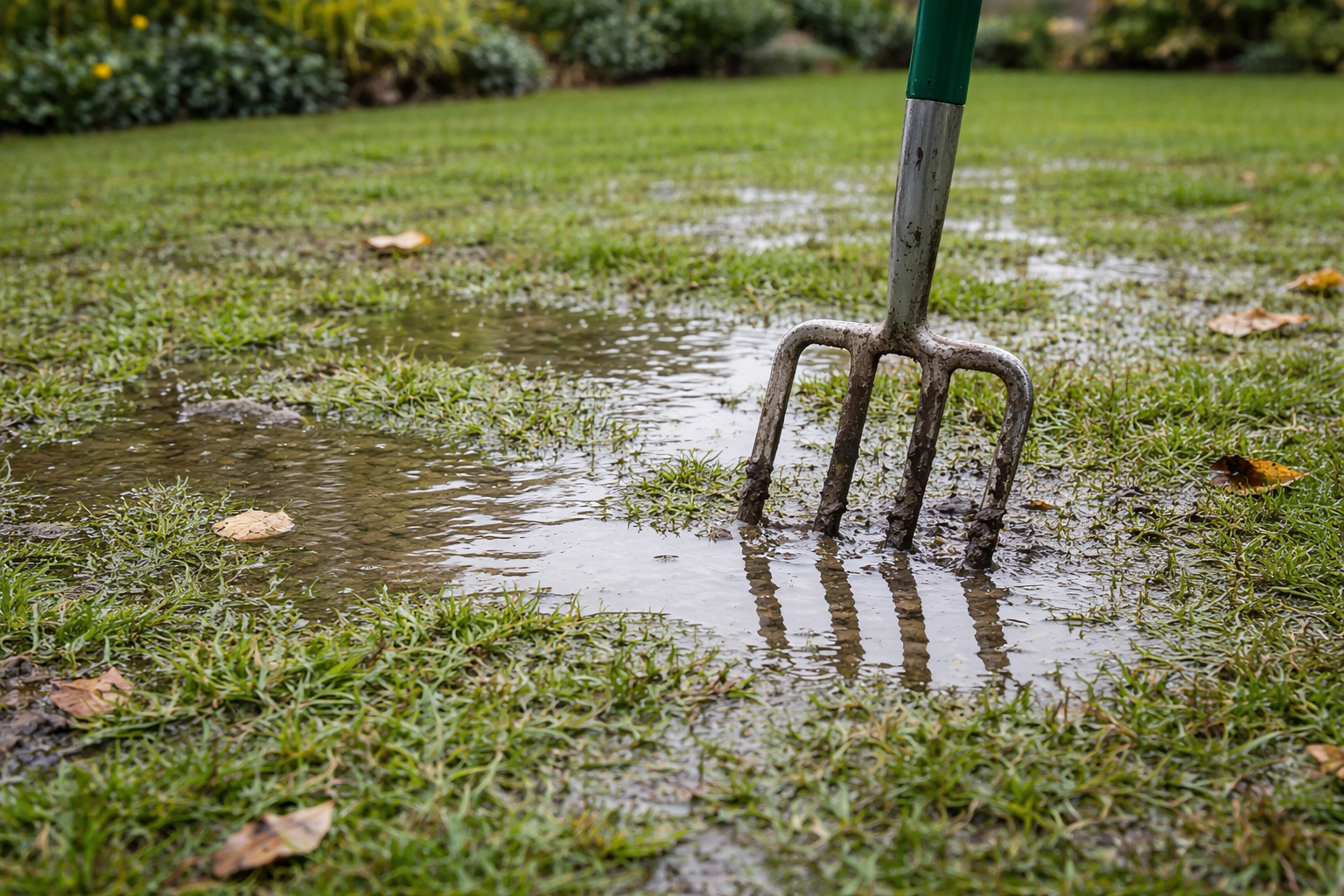
Prolonged wet weather can leave lawns waterlogged, spongy underfoot and slow to drain. If puddles linger after rain or the surface squelches when walked on, your turf is likely holding too much moisture. While brief surface water is usually fine, repeated saturation starves grass roots of oxygen and weakens the lawn, making it more vulnerable to disease and moss.
At County Turf, we grow over 1,600 acres of turf on free-draining sand rootzone in North Lincolnshire. Good drainage is fundamental to healthy turf, whether you’re caring for a domestic lawn or a sports pitch. Here’s how to support recovery when excess water has taken its toll.
Start by allowing the surface to dry. Avoid walking on saturated turf, as this compacts the soil and worsens drainage. Once conditions improve, aeration makes a real difference. Spiking or hollow-tine aeration introduces air and creates channels for water to drain away while encouraging deeper root growth.
On smaller lawns, a garden fork used at regular intervals works well. Larger areas often benefit from mechanical aeration. This is especially useful where water regularly pools or the soil feels compacted. On clay soil, repeated aeration over time can significantly improve structure.
If water damage has caused thinning or bare patches, patience and overseeding help. Choose a quality grass seed suited to your lawn type. Lightly rake the surface before seeding for good seed-to-soil contact, and keep the area lightly moist until germination. Autumn feeding also supports root development and helps the lawn prepare for winter.
In more severe cases, replacing damaged sections with fresh turf may be necessary. Laying new turf on properly prepared, well-drained ground can quickly restore appearance while you address underlying drainage issues.
With careful management, most lawns can recover from waterlogging. Improving drainage, relieving compaction and providing appropriate aftercare will help your turf return to a healthy, resilient surface.