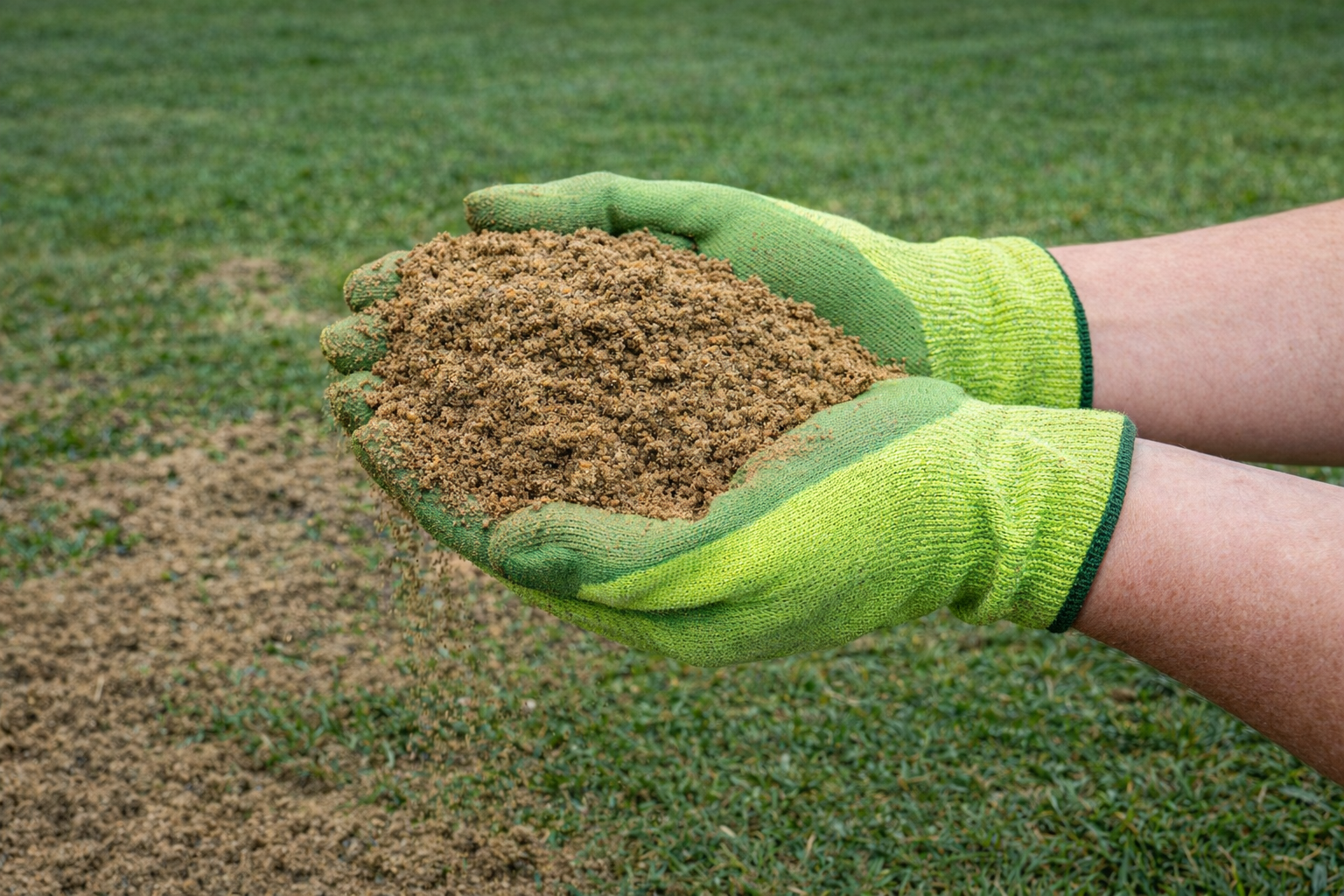
Lawn dressing—applying a thin layer of topdressing material over an existing lawn—is a valuable technique for improving surface quality, drainage and root development. It can level minor irregularities, help break down thatch and encourage a denser sward. When done correctly and at the right time, it supports both domestic lawns and more intensive surfaces such as sports pitches and golf greens.
At County Turf, we understand the demands placed on turf at every level, from home gardens to professional sports venues. Here’s a practical overview of when and how to use lawn dressing.
Top dressing improves soil structure over time, especially where the existing profile is compacted or uneven. It encourages microbial activity, helps integrate thatch into the soil and can improve drainage in heavy soils. On sports surfaces, regular light dressings maintain surface smoothness and playability.
Spring and autumn are the main windows, when grass is actively growing and can recover quickly. Avoid very hot, dry periods or when the ground is frozen or saturated. Light dressings can be applied after aeration to help work material into the profile.
Use a suitable topdressing mix—often a sandy loam or a specified blend depending on your soil type. Apply thinly and evenly; heavy applications can smother the grass. Spread with a rake or lute, then brush or drag to work the material down to the base of the turf. Water lightly to settle the dressing.
Regular, light dressings over time are more effective than occasional heavy applications. Used alongside good mowing, feeding and aeration, lawn dressing helps maintain a healthy, resilient surface.