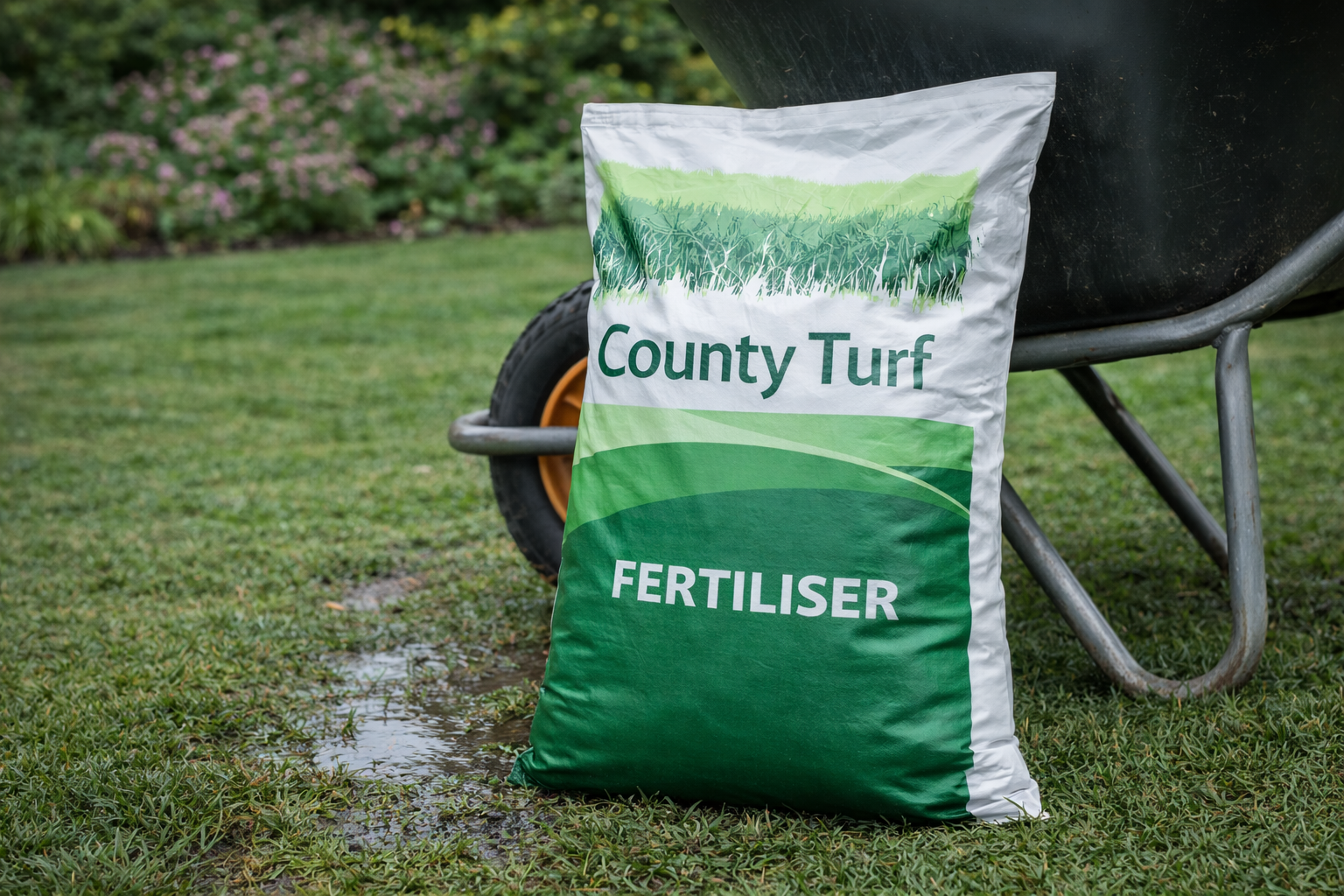
Lawn fertiliser supplies the nutrients grass needs for strong growth, good colour and resilience. Applied at the right times and in the right amounts, it can transform a tired lawn. The key is understanding what your turf needs and when—overfeeding can cause problems just as underfeeding can.
Here are practical tips to help you feed your lawn effectively.
Spring feeding supports growth as the lawn greens up. Autumn feeding is particularly valuable—it strengthens roots and helps the turf prepare for winter without encouraging excessive soft top growth. Summer feeding can help during active growth, but avoid feeding in very hot, dry conditions when the grass may be stressed.
Look for a balanced lawn fertiliser with nitrogen (N), phosphorus (P) and potassium (K). Nitrogen promotes leaf growth and colour, phosphorus supports roots, and potassium improves hardiness. Slow-release formulations provide a steadier supply of nutrients over several weeks.
Follow the manufacturer’s rates—more is not better. Apply evenly; overlapping or missed strips can cause uneven colour. Water in if the product instructions recommend it, and avoid applying when rain is imminent if the fertiliser could be washed away.
After periods of heavy rain, nutrients can be leached from the soil. An autumn feed helps restore reserves and supports the lawn into the following year. Combined with good mowing and aeration, feeding is one of the most effective ways to improve lawn health.