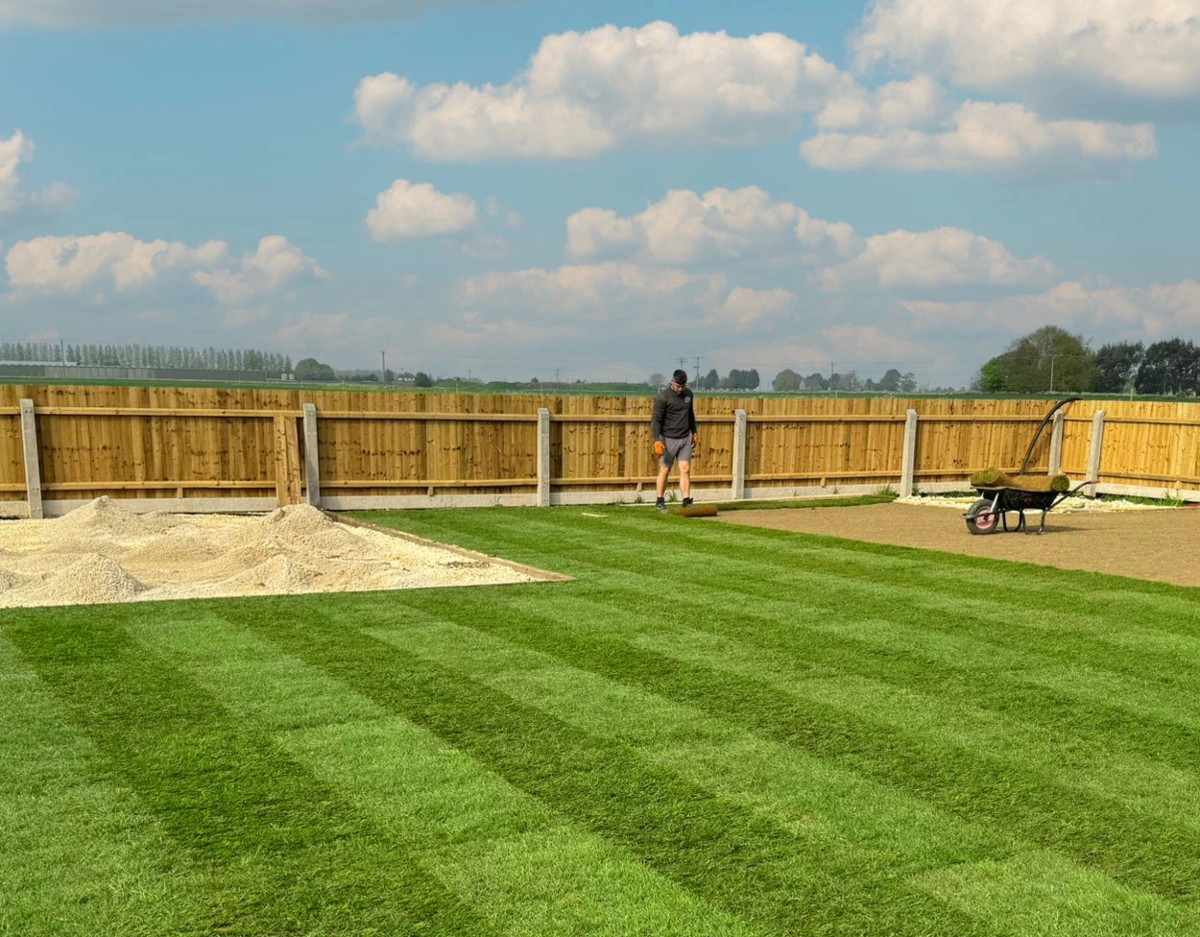
If a job's worth doing, it's worth doing right
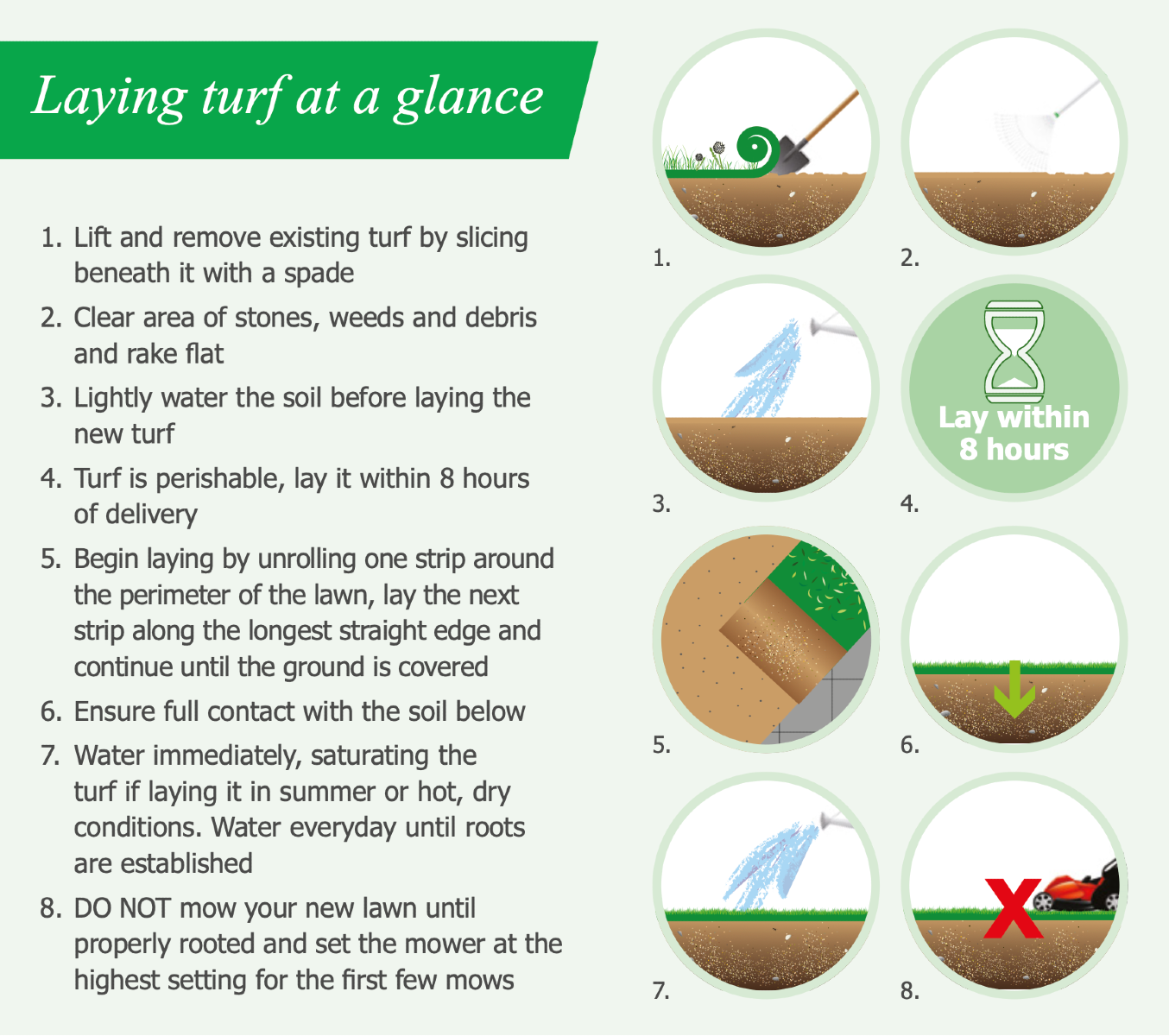
Please see our handy quick guide to laying turf at a glance (click to enlarge). For more detailed information please see our complete laying instructions below.
In order to ensure that your freshly delivered turf grows into a lovely lawn it is crucial to make sure that you are ready to lay the turf on the day of delivery. Your area preparation is very important.
Ground Preparation – Existing turf should be removed by slicing beneath the existing grass with a spade. For larger areas hiring a purpose built turf cutter would be beneficial. The soil should be thoroughly turned over to a depth of 15cm using either a spade or a powered cultivator to make sure that soil is aerated and primed for laying.
Raking – Clear the area of stones, weeds, old turf and other debris. The ground should then be raked to produce a smooth, level surface. Lightly roll or tread the surface by foot to reveal any soft patches – which can then be raked level. Continue this process until the whole area is level and evenly firm, but not compacted. If conditions are dry, lightly water the soil before laying.
Laying– Turf is a perishable product and it should ideally be laid on the same day that it is delivered, this is particularly vital in the summer months. Never water the turf when it is still in the roll as this will damage the rolls further, by adding to the heat already trapped within, speeding the onset of heat damage.
Never walk directly on the prepared soil or newly laid turf. Use boards or planks to walk from and walk on.
To start laying; unroll one strip of turf around the perimeter of the lawn. Avoid using small pieces at the edges as these can dry out and perish. Ensure that the underside of the new turf has full contact with the soil below.
Lay the next strip along the longest straight run and continue to work across the lawn, strip by strip. This should produce a pattern similar to brickwork. Butt adjoining edges against each other but avoid stretching the turf.
Overlapping pieces and the ends of rolls should be cut off neatly with a sharp knife or a half moon edger.
Watering – Water turf immediately after it has been laid. If laying during summer months (March-October) or dry conditions, saturate the new turf and keep watering every day for several weeks, or until roots are established into the soil below.
Water immediately and heavily if there are any signs of the turf drying out i.e. gaps, lifting, browning or curling. As a rule, the hotter, drier and windier the weather, the more watering the turf will need.
Feeding – It is recommended to apply a balanced fertilizer containing similar levels of Nitrogen (N), Phosphate (P) and Potassium (K) every 4-6 weeks during the growing season. Follow the manufacturers recommendations for quantity, timing and method of application.
Mowing– DO NOT cut your new lawn until the turf has rooted properly. You can check this by lifting up a corner of the turf to see if the roots have connected to the soil below.
For the first few times you mow set the lawnmower onto the highest setting to avoid stressing the grass, and remove no more than one third of the grass height with regular mowing.
Once established, the mowing height can be gradually reduced. However, be careful not to ‘scalp’ the turf. An optimum growing height of 20mm to 35mm is recommended for the perfect lawn.
The aftercare that you give your new lawn may need to vary by season. Please see below for specific instructions.
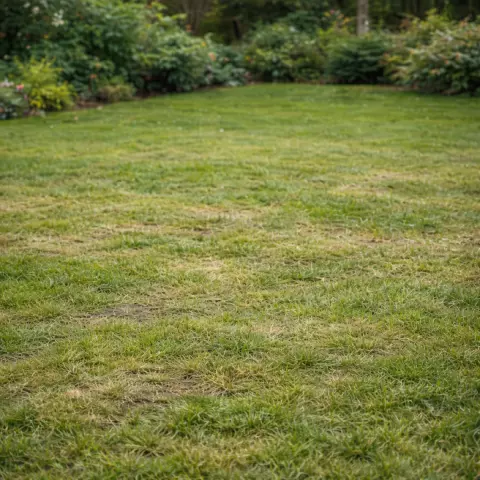
Rake out any dead moss and re-seed any bare patches. If there is a problem dig out coarse grasses and fill holes with screened soil and coarse sand (60/40) before seeding.
Control weeds with a selected weed killer and apply a spring fertiliser, following the manufacturer’s recommendations.
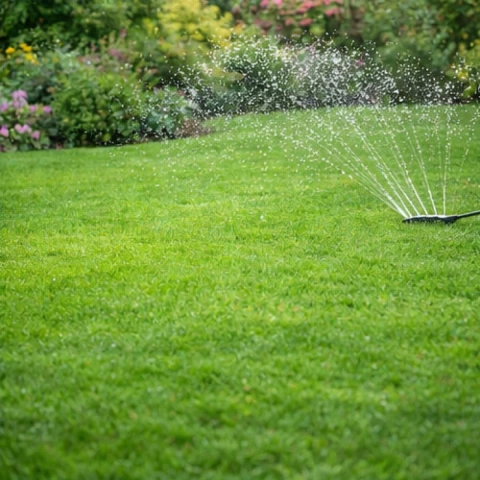
During long dry spells increase your mowing height and water slowly and sparingly if necessary. Apply a summer fertiliser every 6 weeks.
August is the last effective month for weed control.

Scarify, spike and top dress the lawn, then over-seed if necessary. Winter feed should be applied according to manufacturer’s recommendations.
If any signs of fungus attack such as fusarium, red thread or dollar spot apply fungicide at the manufacturers recommended rate. Keep clearing leaves off the lawn.
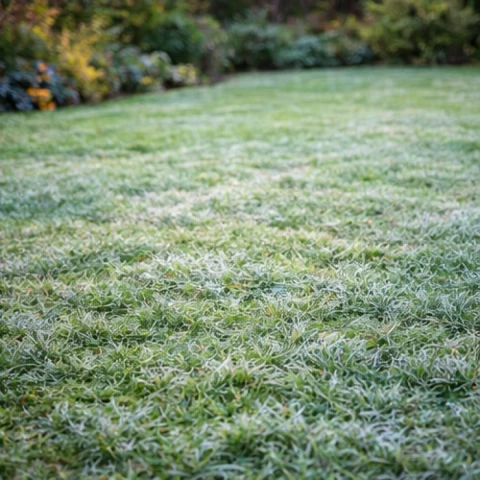
Keep off the lawn in very wet or frosty conditions. In milder conditions begin the lawn care season by spreading worm casts with a light brush when they are dry.
Rake the lawn to remove leaves, dead grass etc – but not too hard as this can damage the grass.